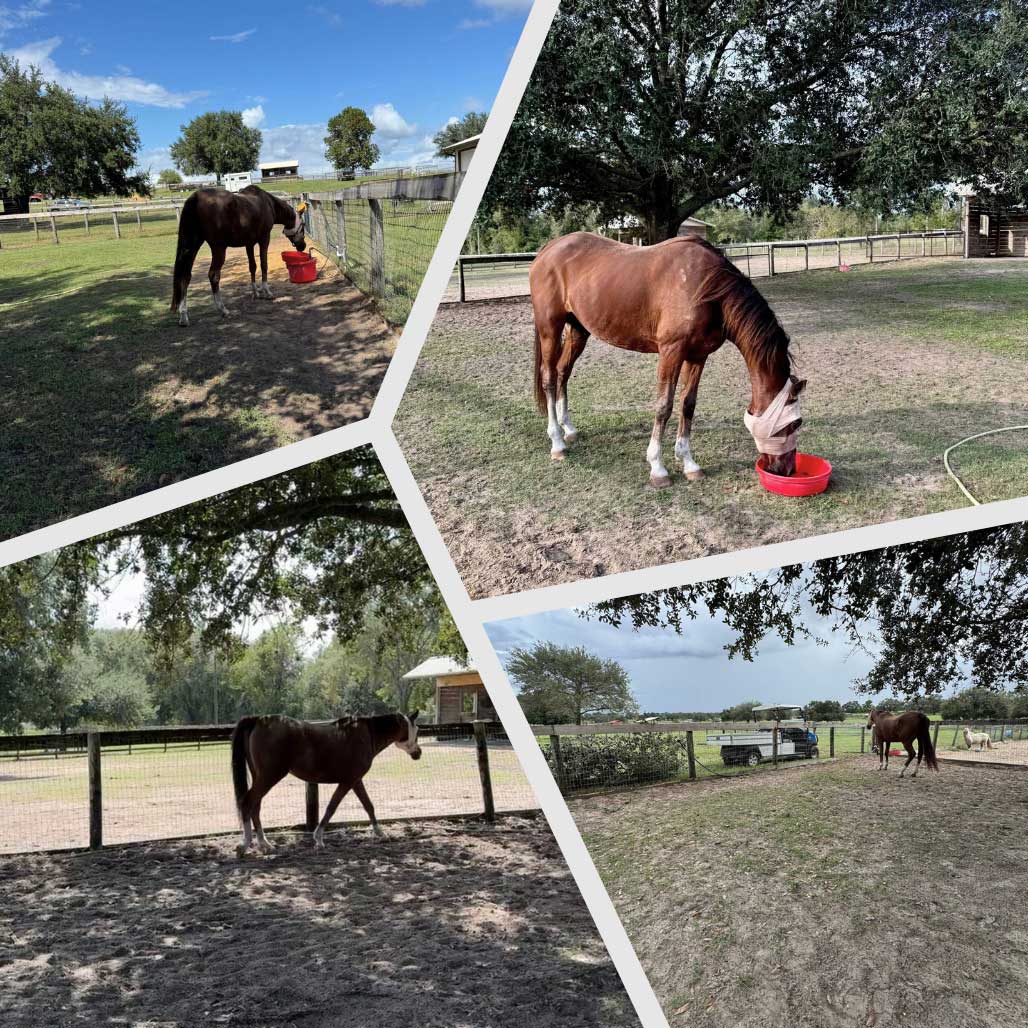
Valley Girl was originally the only horse here that had tested positive for Pigeon Fever, but she is now on the road to recovery as her swelling has gone down and the discharge is clearing up. Mo, although he tested negative, did go into QT due to an abscess which has thankfully, now resolved and he, too, is doing well. Addi also developed an abscess a few weeks ago, and she, too, went into QT. Although she originally tested negative for Pigeon Fever, Addi was not getting better and she has since, developed a lump on her neck. I scheduled the vet to come back out last Wednesday to perform another culture and when I last spoke to him on Friday, I learned that Addi’s latest test, unfortunately, was now positive.

So now, in addition to our daily routine, it is essential that we closely monitor every horse daily, checking each from head to tail. Boo boos are treated, clean fly masks are put on and fly spray is applied. SWAT is applied under the tummy centerline and around wounds and cuts that have already been treated. We are going through a LOT of SWAT, bleach, gloves, and fly spray. Endure Gold, a new fly spray, appears to be the most effective. I prefer the pink SWAT rather than the clear formula as I can see when a horse has already been treated. Feed tubs, masks, grooming supplies, etc. are sanitized daily and foot baths are placed in several locations. Fly masks are hung on the opposite side of the property, fly traps are hung throughout the acreage and the main barn has a fly mister system.

But no matter how hard we try, the bottom line is that it only takes one fly to carry and deposit the sickness on a horse, so fly control is absolutely essential.

Good bio-security practices are a definite must as Pigeon Fever can live in the ground for years and as we have had very little rain, the climate creates a breeding ground for bacteria. Pigeon Fever is not just here at Beauty’s Haven, however, it has also been discovered in NW and Central Florida with a number of cases of strangles appearing as well.

On the lighter side

I must share a funny story about Addi. As big as she is, a few days ago, Addi became terrified of a few turkeys that strolled along the road from the neighbor’s house. I couldn’t help but laugh – it was hysterical! She tried to hide in her shelter and peek out at them, but she would then come running in a panic as if to say, ‘Help me!’ After a few days, she did get used to these strange creatures and she now bravely stands in a corner near the road to watch for them. Such a silly mare!

Lastly, on Saturday we were thrilled to welcome Chris to our wonderful family of volunteers! Magic approved!
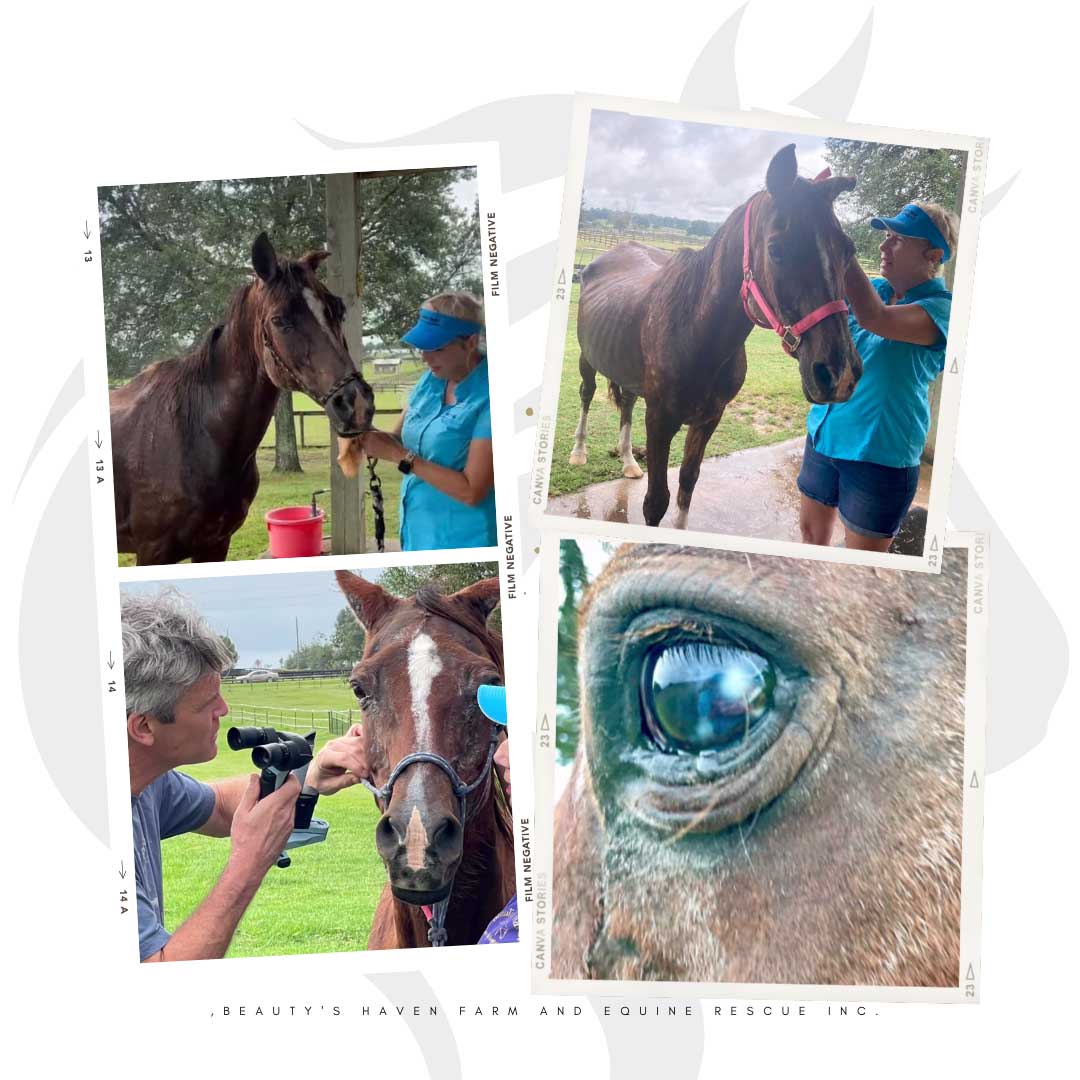
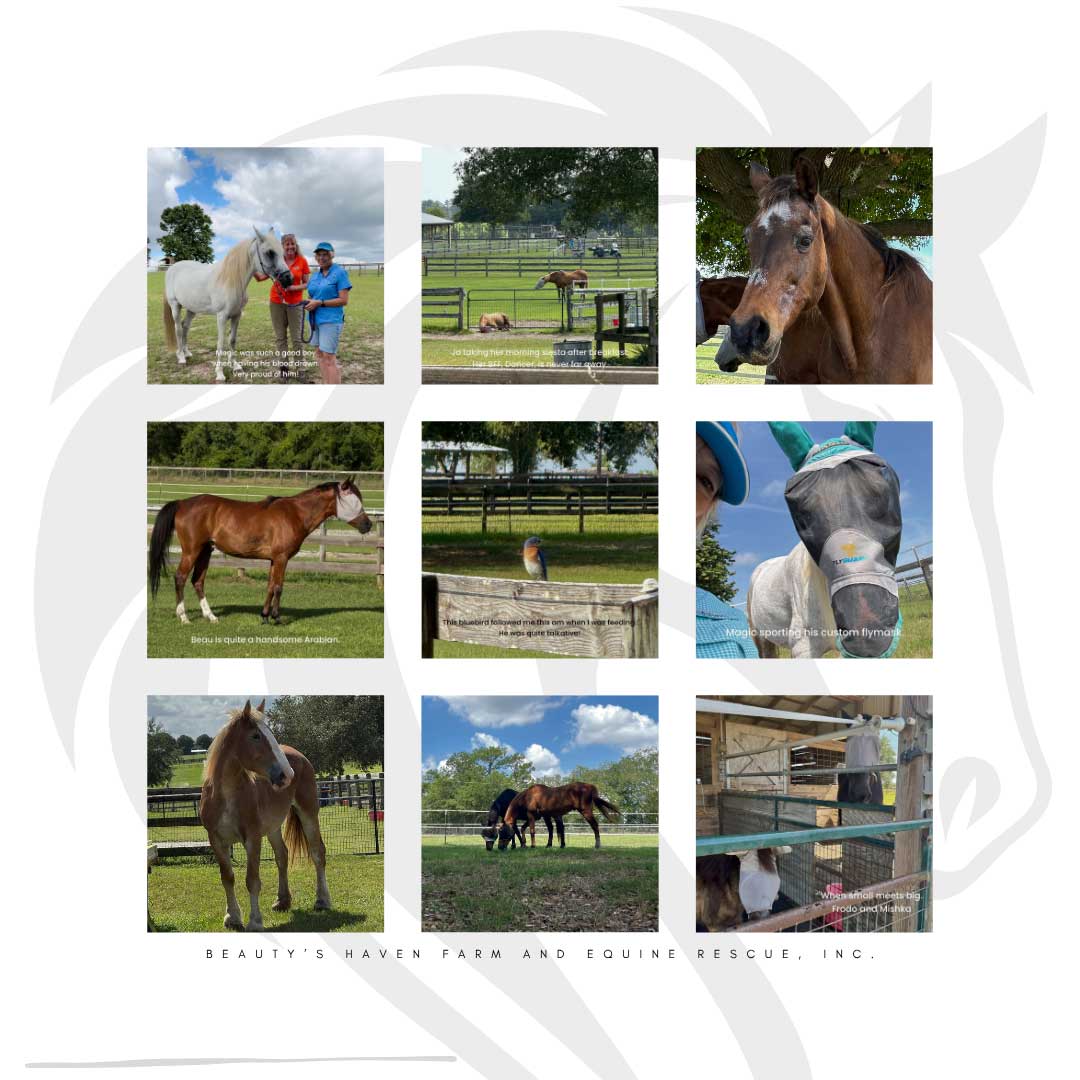
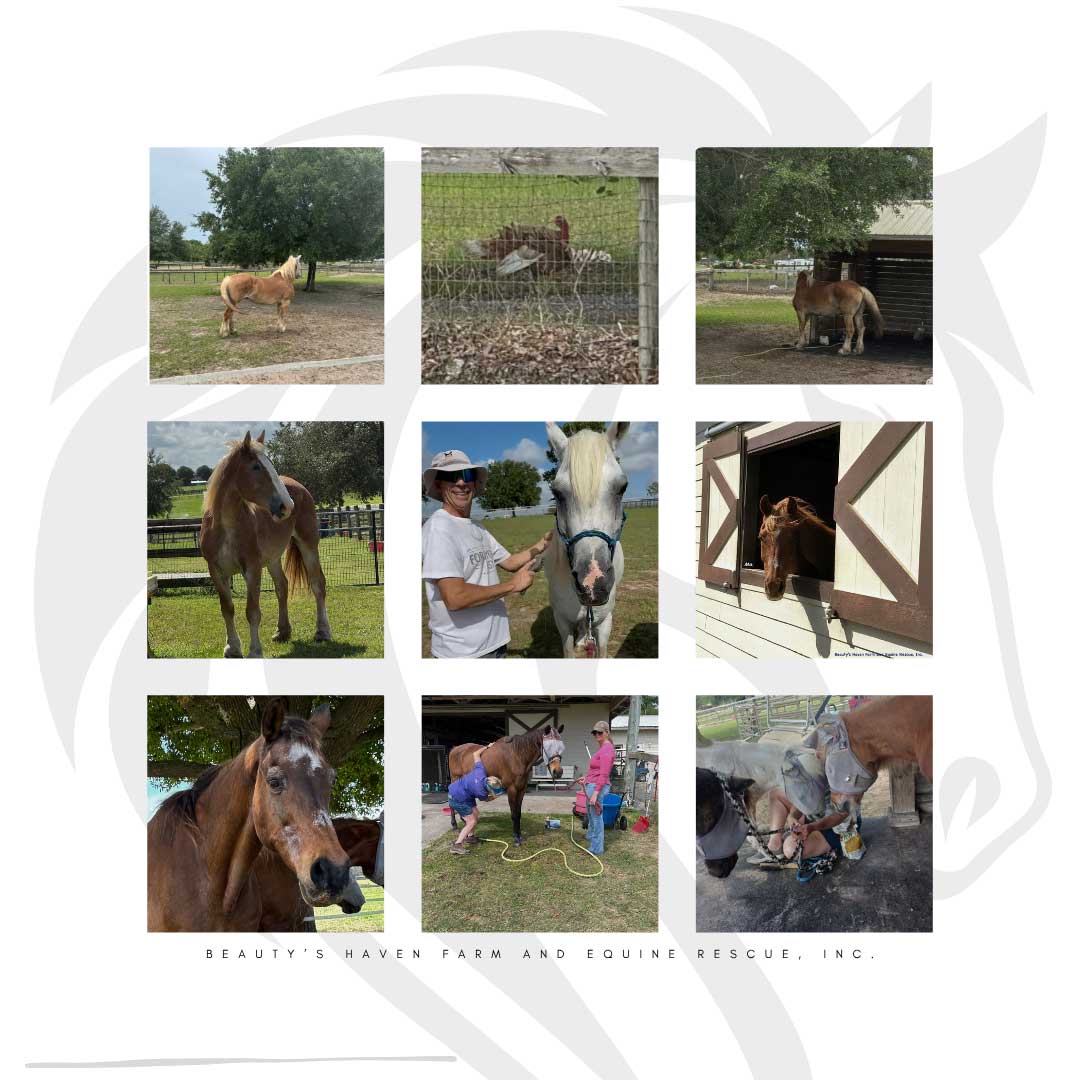
Photo collage of senior horses that were evaluated by Dr. Dianne McFarlane.

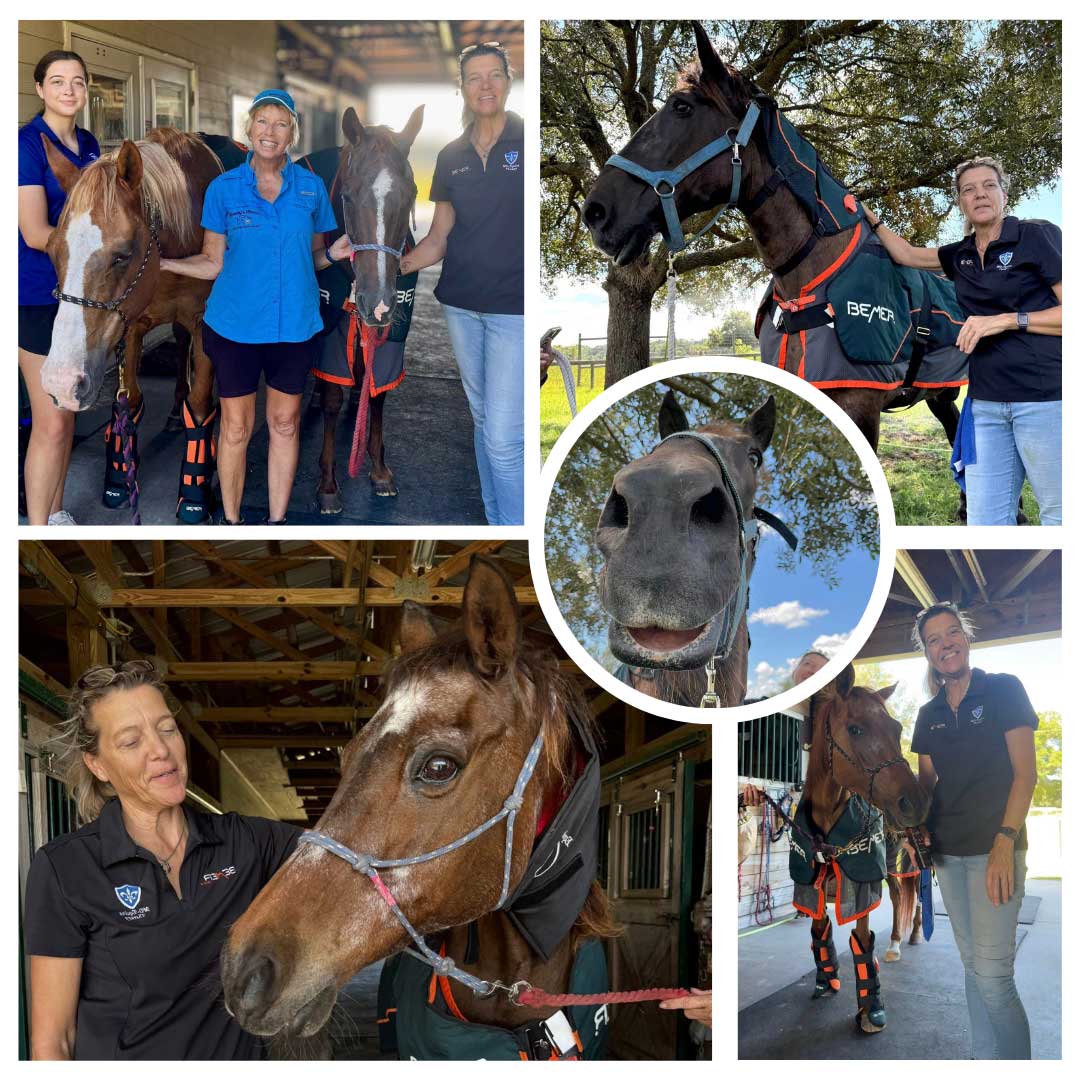
Dr. Dianne McFarlane came out recently to do tests for Cushing’s Disease on some of our horses. She is Chair of the Department of Large Animal Clinical Studies at University of Florida’s College of Veterinary Medicine. Her special area of interest is aging and age related diseases of the senior horse, and we just happen to have quite a few of those here at Beauty’s Haven! Cushing’s Disease is a pretty common neurodegenerative disease that usually affects older horses. Dr. McFarlane hopes to better understand the disease by identifying genetic mutations in order that treatment for Cushing’s can be started earlier.

Valley Girl, the only horse here so far to test positive for Pigeon Fever, is one of the horses Dr. McFarlane tested for Cushing’s and she is positive. This could be a contributing factor to why it is taking her so long to recover from Pigeon Fever. She is better but she’s still working through it. There have been quite a few cases over the past couple of months in and around the Ocala area and there will likely be more as flies are the carriers and they’ve been truly horrible this year. Plus, it’s been very dry.

The first photo is of Dr. McFarlane with Magic. He was so good getting his blood drawn – I was very proud of him! His Cushing’s test was negative but a few others did test positive so they are getting a medication called Prascend. And I thought I’d just share a few other photos while I have a chance.

I didn’t want to let another week end without sending out an update. To say we’ve been extremely busy would be an understatement. As some of you know, Valley Girl got sick about a month ago. It started with edema under her tummy. She was examined by the vet and blood tests were done. Over the next couple of days without improvement, the vet came back and did an ultrasound. A culture was also done and, unfortunately, the results were positive for dreaded Pigeon Fever. Valley Girl had already been separated from other horses and the barn was placed in lockdown. Valley has had a few abscesses rupture from her tummy to her chest. She had another, hopefully the last, to open yesterday.

Each horse is inspected from head to toe daily, sores are treated, SWAT and fly spray are applied, and fly masks are changed.

A couple of weeks ago, we found swelling on Addi’s chest that was suspect, so we put her in quarantine. The vet examined her and performed blood tests and a culture. Most recently, Mo also had some chest swelling so the vet came again to examine him, do a culture and run blood tests. Cultures for both Addi and Mo came back negative, but, out of an abundance of caution, we continue to treat them as a worst case scenario. Since then, the vet has lanced the swelling on Addi’s chest in order to drain and collect the discharge, but there is still some swelling. Mo had one open under his tummy on Friday and although I collected the discharge, he continues to experience some swelling.

Pigeon Fever is transmitted mostly by flies carrying the bacteria when they land on a horse that has open sores or wounds. It is, thankfully, not transmitted nose to nose like strangles. We don’t know where it originated but we are located in an agricultural community and have farms all around us with cows, horses, goats, etc. and the flies are absolutely horrible this year. It is possible that it was already in the ground, but we’ve been here almost twenty years and never before have had this issue.

Bio-security is real and it takes time and resources, all day, every day. Volunteers have been very good about following protocols put in place. It’s been quite an expensive, and exhausting, endeavor with no end yet in sight.

We’ve invested quite a bit into bleach, exam gloves, fly spray, SWAT, etc. If anyone would like to help, we would greatly appreciate it. Donations are tax deductible and no amount is ever too small. We don’t know how much the veterinary bill will be, but we will share it once it is received.

A few of our needs can be found on our Amazon Wish List: https://www.amazon.com/hz/wishlist/ls/363QQBR2KM14O

Thank you and have a safe and blessed weekend.

The vet was out to see Valley Girl on Wednesday as she had some significant edema under her stomach. She seemed a bit off at the beginning of the week, but she did not have a fever. Her heart and respiration rates were normal, her gums were of normal color and she was eating her five meals a day.

Dr. Valle listened to her heart, lungs, etc. and did not believe there were any issues. Valley Girl does have an open sore under her tummy, which, when cleaned up, did exude some puss. Although Valley Girl’s bloodwork results were relatively normal, she has been started on antibiotics.

Valley Girl is staying at the barn for now and is being closely monitored. Once we get her over this issue, we will make an appointment for dental surgery.

She has EOTRH Syndrome which involves degeneration of incisor and canine teeth which sometimes may involve cheek teeth as well. Over time, the roots of these teeth are resorbed or dissolved. Surgery can be performed while standing, but the horse must be heavily sedated. Without surgery, the disease will progress. Valley Girl is a bit up there in age, but aside from today’s edema issue, she is in good health.

Lastly, we are in the midst of ensuring that each member of our beloved herd have ‘Pretty Feet’ for Easter, so if anyone is in a position to assist with this need, both horses and humans alike, would be forever grateful. Just click on the ‘Donate’ button below.

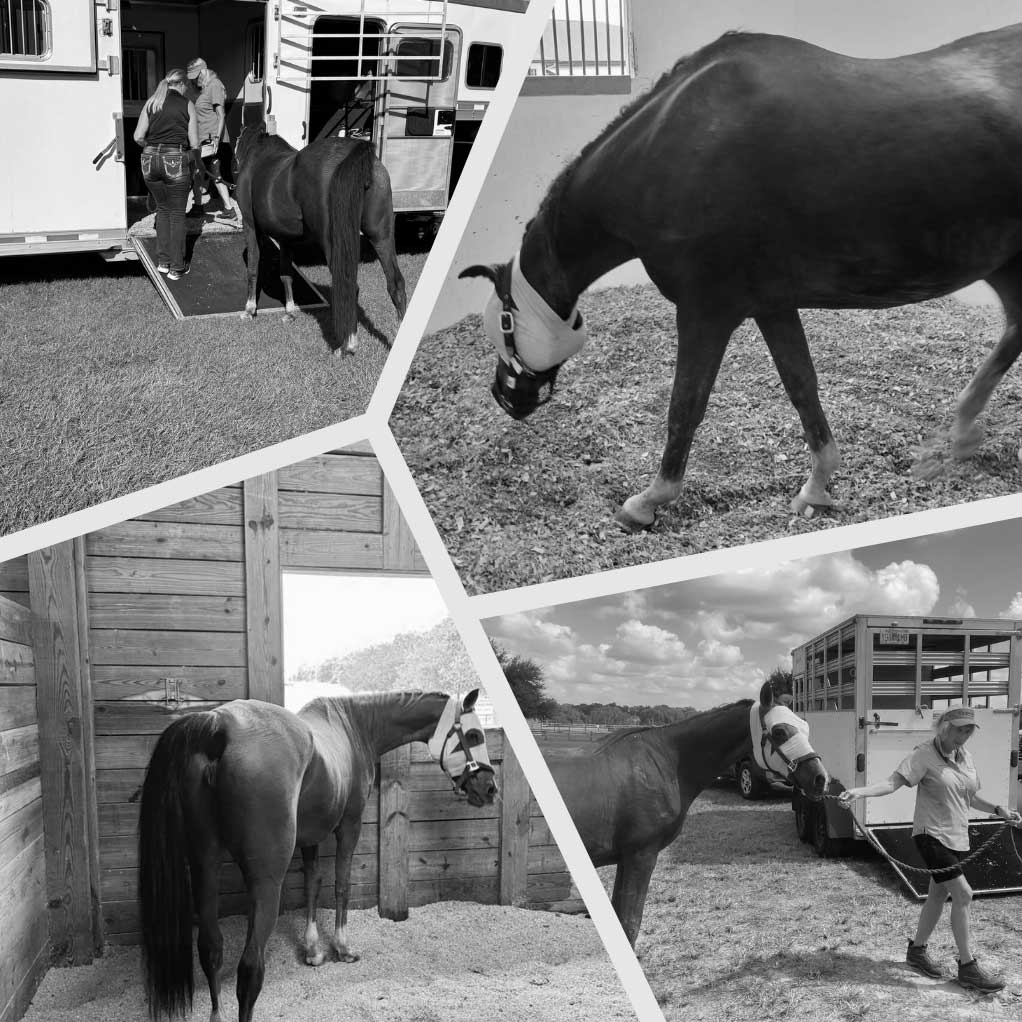
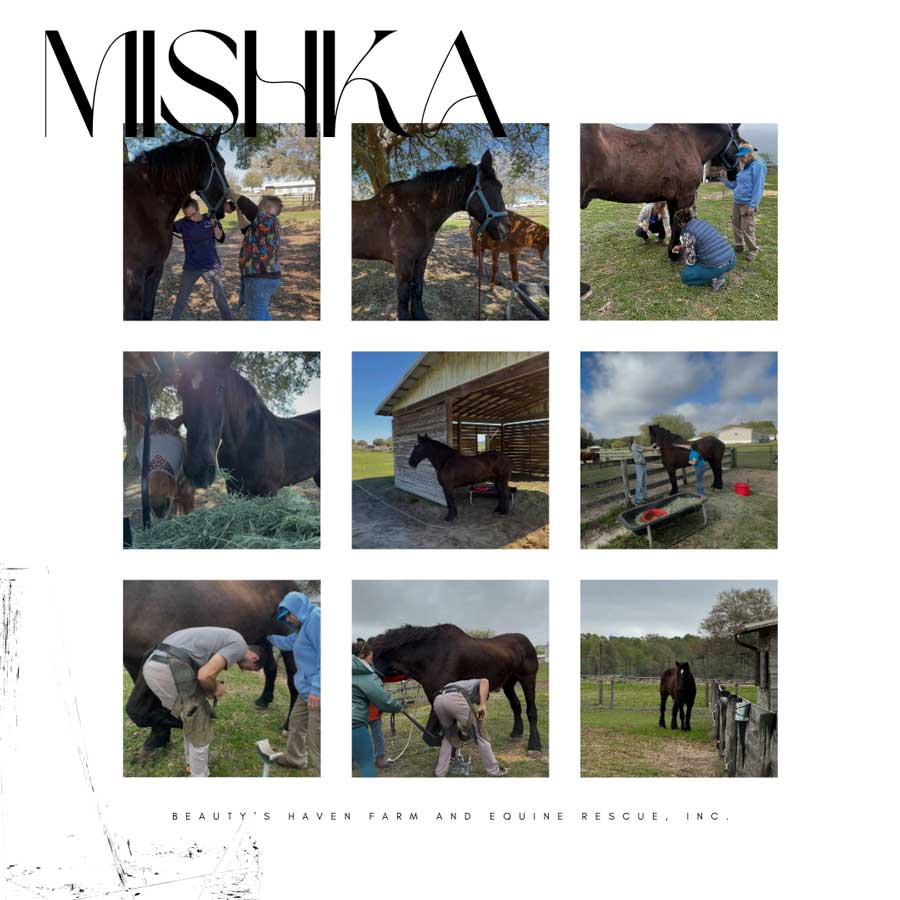
Mishka has an abscess in one of his front feet that has been making him quite uncomfortable. I have tried to poultice it but he just won’t cooperate. He’s a big boy and he knows it. He was living with Willow in one of our south most paddocks but I really wanted him up by our house where I can better monitor him. Getting him from way down there to way up here was quite the chore and it took some time, but we did, thankfully, get him moved. We added multiple loads of sand to his paddock so he could lay down in a soft spot. He has Magic on one side of his paddock to keep him company and he recently met Beau who is on the other side.

Dr. Bess was here last week to check his mouth for any issues and most fortunately, there were none. The vet and farrier also arrived at the farm this past Thursday to attend to Mishka and it was a complete success, thanks in part to the assistance provided by Jessica, Bob, and myself. The teamwork was effective, and I am pleased to report that Mishka is showing improvement. Although his feet still need quite a bit of additional work, over time, this progress is a positive development. We have hope! On Thursday, Rachel and Joshua also provided Mishka with a thorough grooming session while Pam most generously supplied extra hay.

On Friday, while preparing Mishka’s evening meal and hay, we discovered that he had escaped from his paddock and was exploring the area around the house, indicating that he is, indeed, feeling better.

We have raised the necessary funds to cover the cost of Mishka’s expenses as well as for future x-rays to be done before the vet and farrier return in two weeks time. Please keep Mishka in your prayers.

I apologize for the delay in providing a more timely update; things have been incredibly busy here. I’ve received a surge of calls over the past few days from people wanting to surrender their horses. This has been quite overwhelming for me – I hate having to turn any horse away.

Yesterday, the vet came out to examine and perform bloodwork on the new Arabian mare. The results indicate typical issues for horses that haven’t been getting adequate nutrition. She also has a large knot on the right side of her head which most likely, is the result of a previous injury, possibly a kick.

The melanomas around her anus are quite pronounced. We plan to place her on the same protocol as Magic in hope of preventing any further progression. Magic has had significant melanomas in the past, but thankfully, they have remained stable for many years.

Her mane and tail were brushed and it took her quite some time to adjust to having a usable tail again, but she’s very sweet and she seems genuinely appreciative of the care she is receiving. She was scheduled for a much needed hooficure today.

We accomplished much today, thanks to our volunteers, Jenny, Pam, Tara, Melissa, Rachel, Jan and her daughter, Amethyst. They all do such a great job and we truly appreciate them very much.

Dr. Valle came out last week to do a follow-up examination on Flint as well as perform another round of blood tests. He was very pleased with Flint’s progress. Flint seems to have a renewed sense of purpose and is carrying himself with greater confidence. His eyes are brighter and he’s holding his head higher. He is, truly, a precious and kind soul.

We are deeply grateful for the support he has received. He still has a ways to go, but his future is looking more promising!

While we were encouraged by new rescue Flint’s excellent demeanor for his vet exam on Monday, being much more alert and vocal, Flint’s body condition was scored just below a 1 on the Body Condition Scoring Scale by the veterinarian. In this scoring system, which ranges from 1 to 9, a lower score indicates a more difficult rehabilitation process. Sadly, beneath Flint’s fluffy coat, there are only bones.

The majority of horses with a BCS of 1 and below usually don’t make it, as starvation takes a toll. We have had several cases of this nature, and while the majority have pulled through, there have been a few that we have sadly lost. The next couple of weeks are critical. We use the UC Davis protocol in our rehabilitation/refeeding process.

Although the vet assessed him to be 25-plus years of age, I truly believe that he wants to be around for many more years. He has a great mental attitude, which is very important in the healing process and his eyes are bright with hope.

During the process of starvation, the body depletes fat and muscle, causing a slowdown in metabolism and resulting in weakness. The horse struggles to regulate its temperature, and the immune system becomes compromised. The body first utilizes fat for energy, and once that is exhausted, it turns to muscle tissue, including the muscles of the gastrointestinal tract and heart. This depletion of muscle leads to a loss of electrolytes and proteins, causing a deterioration of the digestive system and reduced nutrient absorption. Flint’s gastrointestinal function has been significantly affected, and restoring his ability to digest and absorb feed will take time.

We are committed to supporting him through this, with patience, a proper refeeding plan, and plenty of tender loving care. He truly deserves it.

On Tuesday, we received Flint’s bloodwork results, which reflected those commonly seen in a starved horse. While there are some highs and lows, it’s encouraging that there are no signs of infection, but his fecal exam did reveal that he was positive for parasites. Flint’s stool has become more formed, his appetite remains strong as you can see by clicking on the image above, and he is drinking well.

He was slightly less active on Tuesday, and that is okay – we don’t want him burning much needed calories. He remains very vocal and engaged with everything happening around him. We will repeat the blood tests in about a week.

While I can’t guarantee Flint’s recovery, his determination to overcome is apparent. We will do everything we can to improve his chances.

Last night, with the cold temperatures rolling in, we had Flint all tucked in with a cozy blanket which I’m sure he truly appreciated. It’s a bit large on him but we ordered a new one that should be a better fit. Hopefully, it will be here within the next few days.

Lastly, the farrier came out today to take care of Flint’s neglected feet which made him quite happy.

We will schedule our equine dentist once he is stable and gains a bit more weight.

Please keep Flint in your thoughts and prayers. Your positive support is greatly appreciated. Here, we firmly believe in the power of prayer and in miracles.

We never have a dull moment here at Beauty’s Haven! As you all know, we are involved in a TNR program and we routinely, try to trap the feral cats that visit the farm on either Monday or Tuesday evenings in order to take them to a low cost spay/neuter clinic the next morning. On Tuesday evening, however, we were completely exhausted and didn’t plan on arming the cage which I can activate from the house with a remote control. The cage door, however, unexpectedly dropped down when a cat likely bumped it as we found a momma cat and one of her four kittens in the cage later that night (please click on image above).

The kitten had a painful eye injury so we had no other choice but to take both she and her momma to the vet as soon as possible to treat the kitten’s eye as well as to get both spayed, treated for fleas and vaccinated.

When we arrived at the low cost TNR clinic on Wednesday morning, they were at full capacity for the entire day so we had to take them to another vet in town. When I went to pick them up, I only returned home with the kitten whom the veterinary staff lovingly named Eleanor. Sadly, Eleanor’s mom bit one of the veterinary technicians and is now in QT for the next ten days while Eleanor is resting comfortably in our catio following surgery to remove her eye. I am sure she misses her beloved momma but she does have Allie to keep her company.

Momma cat is still a kitten herself, born in April/May of this year but disappeared when she was about four months old. But, a few weeks ago she showed up at the farm with four kittens in tow. One kitten was mostly white but we have not seen her for a few weeks. Sadly, white kittens/cats don’t seem to do as well here as they appear to be easy prey for coyotes and birds. Eleanor always sticks close to her momma, while her two other siblings are more adventurous – we saw them again a few nights ago (we have cameras set up) and they are all thankfully just fine. We will try to catch them in the near future.

This is yet another unexpected expense with which we really need assistance.

If all had gone as planned, we could have had the spays and vaccinations performed at a low cost TNR clinic, but due to Eleanor’s painful eye injury, we simply could not wait.

Sincerely,
Theresa

Please click on the image above to view a most joyful video of Amira and her dear friend, Waylon.

After Dr. Stolsworth arrived yesterday to examine Amira, it was determined that she needed to go to the hospital where there is a camera which will be better able to scope her. Once at the hospital, Amira’s blockage was successfully cleared but she does have pneumonia. She will be staying at the hospital for a few days and she is now officially, on a soft food diet.

Amira was scoped once again today and everything looks good – no ulcers, polyps, etc., and her esophagus is fine. She has been taken off the IV and she has passed poop. The vet confirmed what we already knew – Amira is a mare with much life still left in her. She feels so good that she was actually making eyes at a colt across the aisle from her!

When Amira came to us over a year ago, she was in very bad shape. It was obvious that her needs had been neglected for quite some time. Even though she’s up there in age, we saw a light in her eyes that clearly said she was grateful for a chance to start a new chapter in her life.

Being an elder horse should not be a death sentence – there simply was no justified reason to euthanize her yesterday.

We were concerned that Amira had lost her ability to swallow, just as Betsy Rose did, and that would have changed the outcome. But that wasn’t the case. We are very grateful for our care team members who take everything into consideration, listen to the horse, and don’t call it too soon. Amira may come home tomorrow – depending on the weather and what is going on here.

A Very Long Night

We’re doing okay though we did lose power for a few hours. Thankfully the generators did come on. Jenny is staying with me at the barn tonight, together with the kittens and littles. We sent Bob home to get some sleep – it’s been a very long day. The winds are pretty bad. The horses out in the paddocks who are all sporting their EquestriSafe ID collars, will be checked at daylight.

Please keep our beloved little herd in your prayers.

Sincerely,
Theresa